Getting Into Traffic Arbitrage in 2026: How Much You Really Need and Where You Can Actually Save
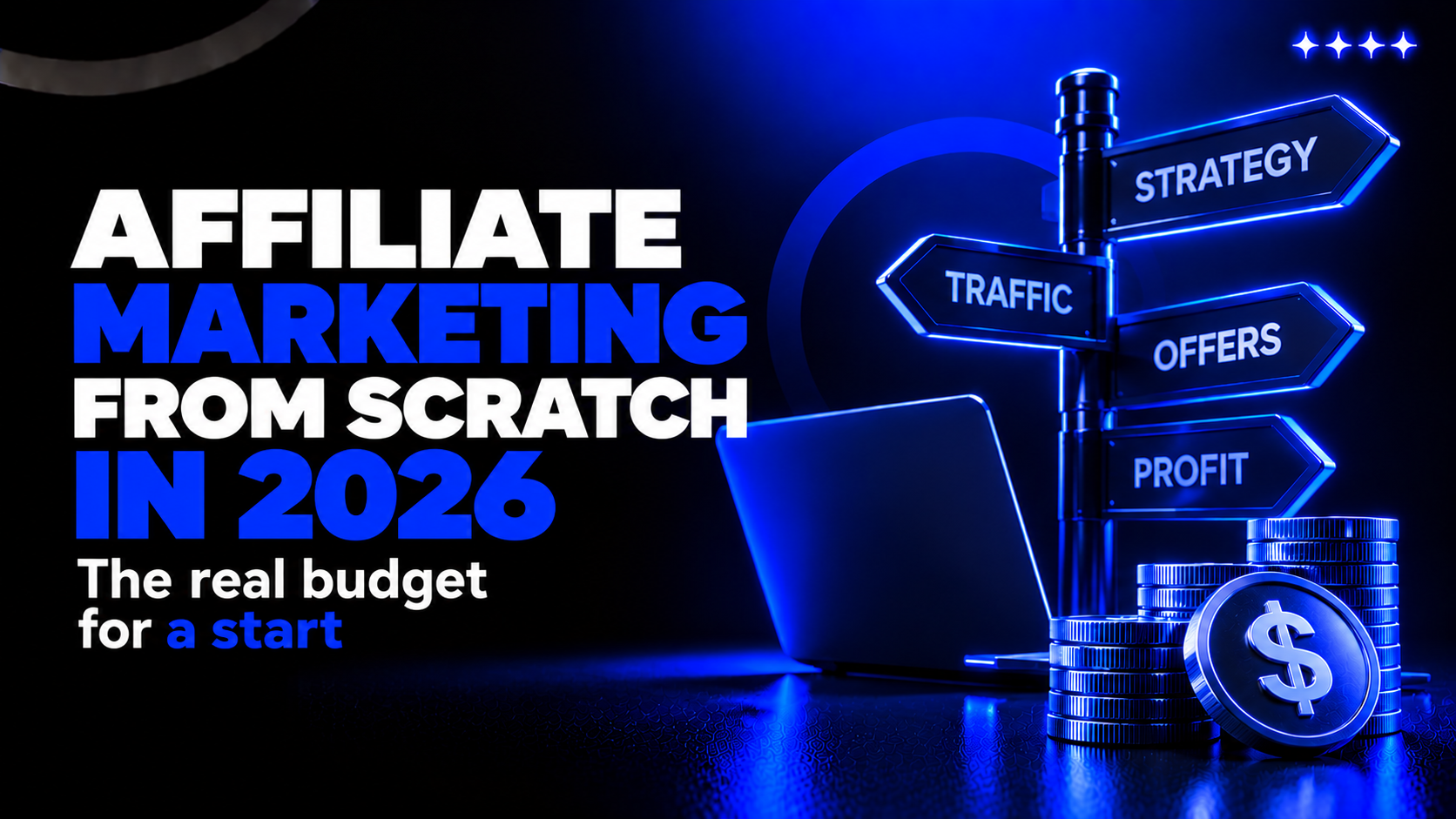
In beginner chats and affiliate marketing communities, one question refuses to die year after year: can you break into traffic arbitrage with nothing in your pocket? It sounds great — earning from affiliate offers without putting up any money of your own. But for anyone who has actually tried to start "from zero," the question tends to draw a tired smile.
Let's settle the terminology first, because that's where most of the confusion begins. "Free" in the sense most beginners mean it — literally without spending a cent — isn't going to happen. No business launches that way today, and arbitrage is no exception. But "cheap," "minimal budget," and "smart on costs" are entirely realistic. The gap between "free" and "cheap" is enormous, and understanding it is already half the battle. Below we'll walk through where the money inevitably goes, where you can cut it down to almost nothing, and what has actually changed in this game heading into 2026.
How much it really costs to get in during 2026
Judging by people who entered the space in 2025–2026, a comfortable budget for your first tests is roughly $300 to $1,000. Some start with less, but then your margin for error shrinks to zero: one bad campaign and the money's gone.
The key point isn't the number itself, though — it's your attitude toward it. This money is not an investment that must come back with profit on the very first campaign. It's tuition. It helps to think of it as the cost of a course, except you're teaching yourself, live, with real money on the line. Your first spends almost never turn a profit; they buy understanding — how a campaign actually works, why your creative failed moderation, where the budget vanished in half an hour, and what all those numbers in the tracker even mean.
The lion's share of a starting budget goes to traffic — paying the ad network for impressions and clicks. And traffic almost never pays off at the start. That's normal. Set your expectations so that the first few hundred dollars are "learning losses," not a failure.
Costs you can't escape
Let's go through the expense categories one by one. Some can be trimmed, some can't be touched. We'll begin with the ones you can't cut.
Ad budget (working capital). This is the main money in arbitrage. Working capital is what you pay the ad network for impressions and clicks. There's simply no saving here: no money for traffic means no traffic. No free source will give you the volume and speed that paid advertising does — unless you're willing to swap money for dozens of hours of manual work. This is the foundation everything else rests on.
Accounts. Ad accounts on Facebook, Google, TikTok, and other platforms. Auto-registered, farmed, or purchased accounts — there are many routes, but you need something to work with. Good accounts cost money. You can register your own, but there's a high chance it gets banned immediately or dies after its first ad. In 2026, platform algorithms have become noticeably more sensitive to "fresh" accounts with no history, so the quality of your assets directly affects how long a campaign survives.
Proxies. Mobile or residential. There's no working around them: switching GEOs, bypassing blocks, and running several accounts at once all require proxies. Cheap options exist, but genuinely free ones that won't burn your accounts basically don't. Some services offer trial periods or a few free gigabytes, but you can't build a serious operation on that.
Payment tools. Virtual cards for paying for ads. No serious ad network will let you launch without a working payment method, and an ordinary bank card often won't do because of restrictions and block risk. It's a mandatory cost, even if not the largest one.
Cloaking — with a caveat. In grey and semi-legal verticals, going without cloaking in 2026 is a non-starter. Moderation has tightened, platforms ban in waves, and AI now flags suspicious ads faster and more accurately than humans. Good cloaking costs money; homemade solutions are possible, but be ready to lose accounts daily.
And here's the caveat that beginners rarely hear: not everyone needs cloaking. If you start on white verticals — finance, education, travel, honest e-commerce — clean ads pass moderation just fine, and you won't need cloaking at all. For a newcomer that's excellent news: a white start eliminates one of the most expensive and riskiest cost lines in one move. You can always graduate to grey niches later, once you have experience and a cushion.
The rule every burned marketer repeats: don't play with your last dollar. Use only money you can afford to lose. You'll sleep better, so will the people around you, and your head will stay clear — which means a far better shot at actually figuring the game out.
Costs you can trim
Some tools make life easier but almost always have free or near-free options at the start.
Antidetect browsers. Plenty of room to save here. Popular services like Dolphin{anty} or AdsPower have free tiers — usually for a small number of profiles, say up to ten. That's enough to get going. When you need more profiles, that's the moment to consider a paid plan. On top of that, affiliate channels regularly drop promo codes for extra free profiles or discounts.
Trackers. Analyzing traffic without a tracker is like walking through a forest blindfolded. Many trackers offer free tiers with limits on campaigns or clicks — enough for your first tests. There are also free self-hosted options if you're comfortable running a tracker on your own server.
Spy tools. No longer mandatory, but many use them to study competitors' creatives instead of reinventing the wheel. You can find stripped-down free versions or split an account with someone. You can survive without spy tools at the very start — but the moment you begin scaling, they save enormous amounts of time.
Where people actually save in 2026
Now the good news. There are whole areas where costs can drop to almost nothing — if you're willing to invest time instead of money.
Creatives and design with AI. Probably the biggest shift of recent years. What you used to pay a designer for is now generated by AI. Neural nets assemble banners, backgrounds, ad imagery, entire landing pages, and even video creatives — and voiceovers and short-clip editing are now handled by AI with minimal human input. You'll need to wrestle with prompts and develop an eye for it, but the savings are massive. If you want something fast and no-frills, Canva's free templates do the job. A distinct 2026 trend: short AI-generated clips and mini-series for vertical platforms, produced almost on an assembly line and for next to nothing.
Conditionally free traffic (organic/"free" sources). These are sources where you pay with time instead of money. A lot of time. But when you have almost no budget, they become both a lifeline and a school — you learn to understand your audience without burning cash to do it.
Your own site, blog, and SEO. You can run a blog on free platforms, or stand up a simple site on free hosting. Articles built around search queries bring traffic for months and even years after publishing — unlike paid ads, which stop working the instant the money runs out. We'll come back to SEO separately, because for site owners it's the crux of the whole thing.
Social media and short-form video. Facebook, Instagram, TikTok, YouTube Shorts, Pinterest — you can pull organic traffic everywhere. But here, consistency and volume decide everything. One video a week does nothing; five clips a day can take off. You need many accounts, a lot of content, many attempts to land in the recommendations feed. In 2026, algorithms reward frequency and engagement, not one-off masterpieces.
Forums and Q&A services. Quora, Reddit, niche forums. Become a visible expert there and drop links carefully and on-topic, and traffic will follow. It's slow and tedious, but nearly free — and it delivers a very "warm" audience that already trusts you.
Telegram and email. You can fill a Telegram channel with useful content, grow subscribers, and gradually funnel them to offers. Email works if you have a list; if you don't, you can build one, and some email services offer free tiers for a small number of contacts. Both channels are "owned" traffic — the kind no moderator can take away with a single click.
Keep this in mind: none of these sources are fast. You won't see results tomorrow. They demand systematic, daily work. But if you have time and no money, this is your path.
Where to get tools for almost nothing
A few practical hacks beyond the free tiers already mentioned.
- Promo codes and bonuses. Experienced marketers may chuckle at this, but for a beginner a $10 credit or a couple of extra antidetect profiles is real help. Follow a few large affiliate channels and watch the posts.
- Trial periods. Many services offer 7, 14, or even 30 days free. Activate them only when you're genuinely ready to work — there's no point burning a trial while you sit and deliberate for two weeks.
- Group buys and sharing. With friends or through communities you can split a pricey service and use a single account. Careful, though: many services dislike this and will ban you for it.
And here's what you should not cheap out on — proxies and cloaking (where it's needed). Cheap proxies and free cloaks almost guarantee account bans and lost budget. Better to pay for a solid solution than to overpay three times over in burned assets.
For site owners: your website is an asset, not a consumable
If you're coming into this from the website side and already know how to grow organic traffic, you're holding an advantage a pure media buyer doesn't have. For a media buyer, a site is a landing page, a consumable, a throwaway. For a webmaster, a site is an asset that only appreciates over time.
Here's where the payoff sits in 2026. First, organic traffic from search and recommendation feeds doesn't switch off when the budget runs dry — it works for you as long as the content stands. Second, your own site can't be "banned for advertising casinos or dating" as easily as an ad account — provided you run it cleanly and don't break the rules of the platforms you link to. Third, against the backdrop of tightening privacy and the sunset of third-party cookies, your own audience and first-party data keep growing in value: subscribers, an email list, returning readers — those are things you control yourself.
The practical upshot is simple: while a media buyer tests campaigns on paid traffic, a webmaster can build a content project in parallel that, a few months out, starts delivering free leads to the same affiliate offers. One channel gives you speed, the other gives you durability. Ideally you combine them.
Keep generative search in mind too. In 2026, more and more queries are answered right in the results by an AI summary, and a share of clicks never reaches sites at all. That reshapes SEO strategy: the winners are pieces with genuine expertise, real experience, and things an AI answer can't paraphrase for you — concrete case studies, hard numbers, fresh data.
A step-by-step plan for a minimal budget
If money is tight but you have time and drive, a sensible sequence looks like this.
- Pick a white vertical. Finance, education, travel, honest e-commerce. This removes cloaking costs and gets you friendlier moderation.
- Find an offer and a network. Study the terms, the payout minimum, and the traffic requirements. Start with something clear and legal in your GEO.
- Assemble a free stack. Free antidetect tier, free tracker, AI for creatives, Canva. Spend only where you truly must (proxies, payment tools).
- Start with organic, not paid buying. Short videos, your own blog, forums — that's how you learn your audience without burning money. The first leads from free sources tell you which offer actually converts.
- Reinvest, don't cash out. Return your first profit to the business: buy more assets, test paid traffic on a campaign you've already validated.
- Measure everything. ROI, cost per lead, payback by source. Without numbers, you're not an affiliate — you're a gambler.
Common beginner mistakes
- Playing with your last dollar. The most common and most painful. Work only with money you can afford to lose.
- Expecting profit from the first campaign. Early tests are learning, not earning. Anyone expecting instant profit quits after their first loss.
- Cutting corners on proxies and accounts. Cheap assets burn out faster than you can test anything and end up costing more.
- Spreading yourself too thin. Five verticals, three traffic sources, ten offers — and results in none of them. At the start, one well-executed campaign beats ten half-baked ones.
- Working without a tracker. With no analytics you can't tell what works, so you just burn budget blind.
- Blind faith in "guaranteed schemes." Any promise of "free arbitrage with guaranteed income" is marketing, not reality.
What changed in 2026 and what to prepare for
A few trends that define how a start looks right now.
- AI moderation got stricter. Platforms flag suspicious ads faster and more accurately. The bar for grey niches has risen, while a white start looks noticeably more attractive for newcomers.
- AI made production cheap. Creatives, landing pages, video, voiceovers — all dramatically cheaper and faster. Competition on visual quality went up, which makes the idea and the offer matter even more.
- Privacy and cookies. Cutbacks on third-party cookies and tighter tracking rules raise the value of your own audience and first-party data — another argument for owned sites and subscriber lists.
- Regulation. Advertising rules and disclosure requirements keep tightening across GEOs. Before you start, check what's actually legal in your jurisdiction and vertical.
The bottom line
Starting arbitrage with a zero budget and turning a profit within a month is fantasy. Starting with a small budget and smart cost control, however, is entirely workable.
Costs you can't escape: the ad budget (the big one), accounts, proxies, payment tools, and — for grey niches only — cloaking. You can save seriously on creatives (AI), on part of your toolset (free tracker and antidetect tiers, promo codes), and on your first traffic tests via free sources instead of paid ads.
If you're ready to trade time for money, social media, SEO, forums, blogs, and your own site will bring your first leads. For site owners this is the real edge: a website and an owned audience are an asset that appreciates, not a consumable that burns.
And above all — don't believe promises of "free arbitrage, guaranteed." Arbitrage is about testing, risk, and burned budgets. But done carefully, with the numbers watched and no hope for miracles, it's a genuinely workable way to earn. It just never happens with zero investment — and that's perfectly fine.
Share this article
Send it to your audience or copy an AI-ready prompt.