Анг статья арбитражник
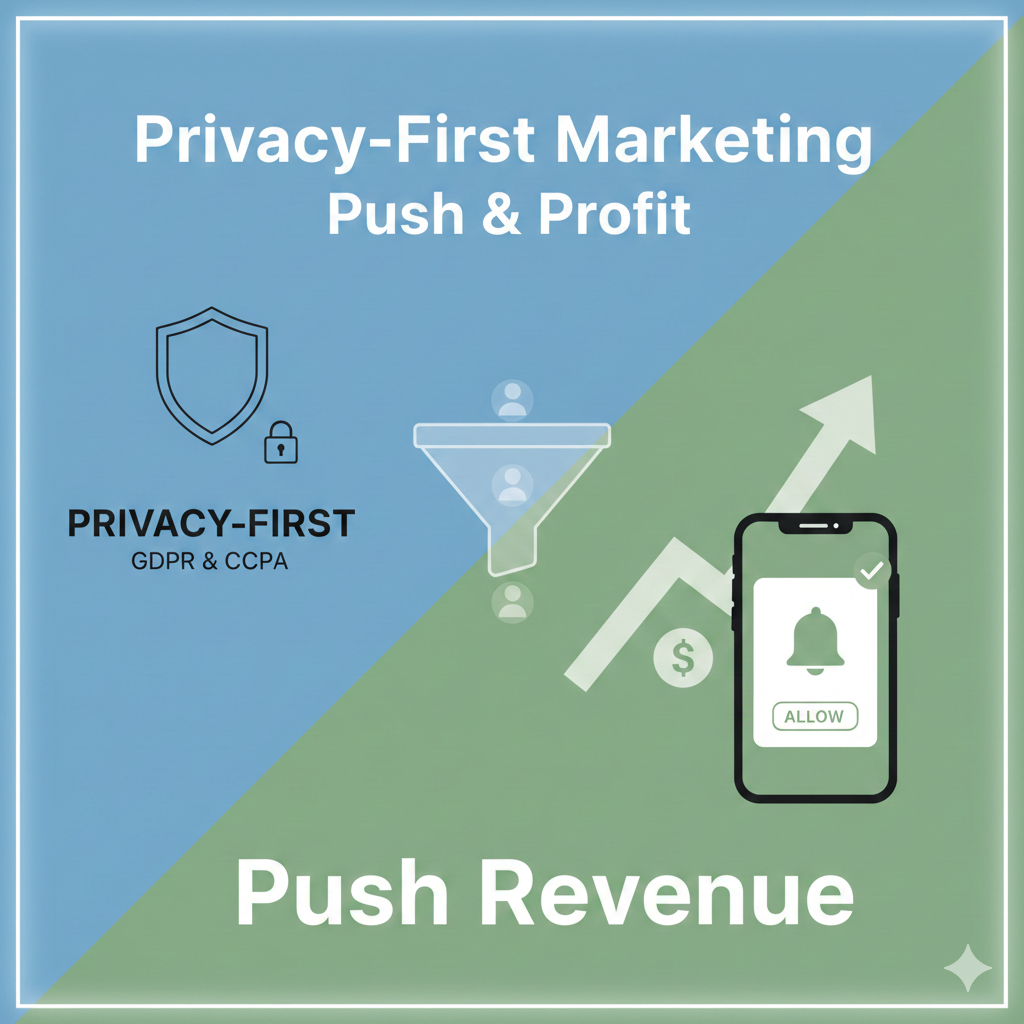
In short: Privacy-first marketing is already affecting your bottom line. Not in the future—right now. GDPR and CCPA are changing the rules of traffic management, and this is especially noticeable in push networks. Old subscription collection schemes are slowly dying; sites that fail to adapt are losing traffic, subscribers, and money.
This article isn’t about legal jargon. It’s about how to avoid losing money and how to squeeze the maximum value out of push notifications under these new conditions.
What Has Changed for Affiliates and Site Owners
1. Auto-subscriptions and Aggressive Prompts No Longer Work
Browsers, ad platforms, and regulators are consistently cutting down on anything that looks like manipulation:
- Clicks without explicit consent.
- Hidden subscription windows.
- Misleading copy.
The result is simple: conversion rates for push subscriptions drop if you use old-school approaches.
2. Subscription Volume is Down, but Revenue per Subscriber is Up
This is a key point many overlook. Yes, there are fewer subscriptions. However, their CTR is higher, the unsubscription rate is lower, and the eCPM for push broadcasts is actually growing!
Why? Because the subscriber base now consists of conscious users rather than accidental traffic. For monetization, this is a plus—provided you know how to work with a high-quality database.
Why Push Remains a Top Channel in the Privacy-First Era
Against the backdrop of cookie blocking, fingerprinting restrictions, and retargeting hurdles, push notifications are one of the few channels that are "legal by default."
- Explicit Consent: Push works based on clear user permission.
- Cookie-Less: It doesn’t require cookies or depend on third-party data.
- Scalable: It remains easy to scale.
For site owners, push notifications represent return traffic, audience control, and stable monetization even when SEO and traditional ads are volatile.
How GDPR and CCPA Specifically Affect Push Subscriptions
What is prohibited or penalized by algorithms:
- Auto-subscriptions without explaining the value proposition.
- Intrusive text like "Click Allow to continue."
- Collecting excessive user data.
If you use these tactics, it's not a matter of if, but when your conversions will tank and problems will arise. While there are fewer subscriptions, each one earns more money.
How to Adapt Your Push Strategy for Privacy-First
1. Focus on Quality Over Quantity The metrics you should be watching now are:
- Revenue per subscriber.
- Push campaign CTR.
- Database retention.
- Push traffic RPM.
2. Contextual Segmentation Instead of Aggressive Tracking Where you might have tracked "everything" before, it’s now better to keep it simple:
- Page category.
- Content type.
- Traffic source.
This is enough to segment your push notifications, increase CTR, and boost revenue—all without violating GDPR or CCPA requirements.
3. Push as the Foundation of Return Traffic As SEO becomes unstable, ads get pricier, and retargeting is restricted, push subscriptions become the anchor that brings users back to your site repeatedly.
For the affiliate, this means:
- An additional traffic channel.
- An opportunity to boost ROI.
- Less dependence on paid sources.
The Bottom Line
Privacy-first is not a threat; it’s a filter. It removes "garbage" traffic, leaves you with high-intent users, and turns push notifications into a stable income stream. If you are a site owner or an affiliate and you structure your push subscription strategy correctly, you will retain your traffic, increase your revenue, and become less dependent on external platforms.