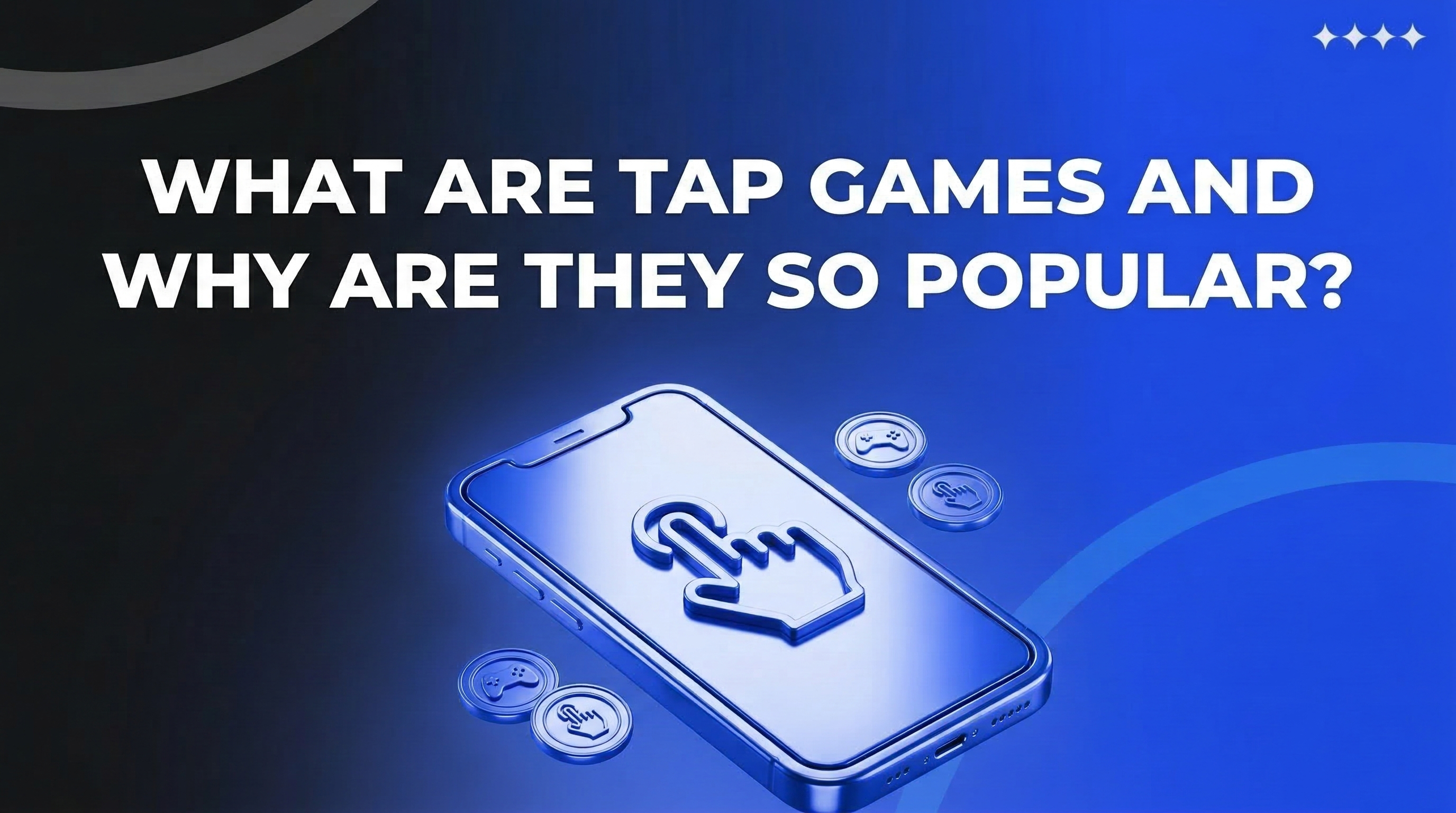
What Are Tap Games and Why Are They So Popular?
If you've noticed your classic slot campaigns converting worse lately and your audience becoming less responsive — it's probably not your creatives or offers. There's simply a new player in the market changing the rules of the game.
Meet tap games — a format that's evolved from experimental mechanics into a serious competitor to traditional gambling in just a couple of years.
In this article, we'll break down what tap games are, why they're growing so fast, and what it means for affiliates.
What Are Tap Games: Mechanics and Core Principles
Tap games (or clicker games in the gambling industry) are a simplified format of casual gambling games where the core gameplay comes down to a single click. The player places a bet, taps the screen, and instantly gets a result: win or lose.
Unlike slots, where you wait for reels to spin, or crash games that develop along a curve, tap games deliver results in a fraction of a second. No animations, complex rules, or multi-level bonuses — just pure bet-result mechanics.
Examples of Popular Tap Games:
- Mines — player reveals cells on a grid, avoiding mines
- Plinko — ball drops through obstacles to multipliers
- Dice — simple dice roll with range selection
- Crash Tap — simplified crash game with instant results
- HiLo — guess the next card (higher/lower)
- Piggy Tap — themed clickers with visual storylines
The key feature: all these games run on random number generators (RNG), but display results almost instantly after the click.
Why Tap Games Exploded: 6 Key Factors
1. Speed Is the New Currency of Attention
Modern users consume content in "swipe-swipe-click" mode. TikTok, Reels, and YouTube Shorts have trained audiences for instant gratification. If something takes more than 3 seconds to understand — it's already too slow.
Classic slots with their animations, spin delays, and bonus rounds don't fit this rhythm. Tap games fit perfectly: click — result — next bet. The entire cycle takes less than a second.
This isn't just convenience — it's neuroscience. The dopamine cycle works on stimulus frequency, not intensity. The more often a player gets feedback, the stronger the habit to continue.
2. Mobile-First Design, Not Desktop Adaptation
Slots were originally created for desktop: lots of interface elements, detailed graphics, horizontal orientation. Mobile versions are adaptations, compromises.
Tap games were born in the mobile era. They're designed for vertical screens, one-thumb control, and short sessions. This isn't a stripped-down version of something bigger — it's a complete product built for specific user behavior.
Practical Impact for Affiliates:
- Higher CTR on mobile creatives (no cognitive dissonance)
- Lower bounce rates after first click
- Better performance with vertical formats (stories, TikTok Ads)
3. Entry Barrier Approaching Zero
To start playing slots, users need to:
- Understand payline concepts
- Figure out bonus symbols
- Study multiplier tables
- Master the settings interface
In tap games, instructions fit in one sentence: "Tap and see the result." No need to read rules, study mechanics, or understand terminology. This is critical for cold traffic: the simpler the product, the higher the conversion from first touch.
4. The Illusion of Control Keeps Players Engaged
The gambling paradox: although outcomes are RNG-determined, players seek a sense of influence over the process. In slots, there's no control — you just press a button and wait. In crash games, control exists but requires skill and strategy.
Tap games found the balance: players choose when to click, how many bets to place, and game pace. The control is illusory (results are predetermined), but psychologically it's enough. People feel like they're managing the process, not just observing it.
5. Action Frequency = Conversion Frequency
In a classic slot, a user makes 40-60 spins in 10 minutes. In tap games during the same period — 300-500 clicks. This isn't just engagement, it's optimization data.
What This Means in Practice:
- Facebook/TikTok/Google algorithms learn faster who converts
- Lookalike audiences build on more precise signals
- Retargeting works better (more micro-conversions to track)
From a media buying perspective, tap games generate more events for campaign learning. The faster algorithms learn, the lower your cost per action.
6. Session Pattern: Many Short Sessions Instead of One Long One
Classic gambling model: player dedicates an hour in the evening, sits down, plays, leaves. This requires conscious decision-making and free time.
Tap games work differently:
- 2 minutes in line
- 5 minutes during lunch break
- 3 minutes before bed
- 1 minute in the elevator
Instead of one hour-long session — ten 5-minute sessions. Total playtime can be the same or higher, but psychologically it feels lighter. No sense of "wasted evening," just a habit of "checking in for a minute."
For affiliates, this means more evenly distributed activity throughout the day and higher retention through routine integration.
The Retention Problem: Why Not All Tap Games Are Created Equal
Quick start is tap games' strength, but also their weakness. Simple mechanics mean novelty burns out fast. If the game is just endless clicking without additional layers, interest drops after 2-3 days.
How Developers Solve the Retention Problem:
Progression Systems:
- Player ranks and levels
- Unlockable new modes
- Achievement collections
Gamification:
- Daily missions
- Tournaments with leaderboards
- Limited-time events
Social Mechanics:
- Player-vs-player competitions
- Referral bonuses
- Team challenges
Economic Incentives:
- Activity cashback
- Multiplier boosters
- VIP programs
If an offer is built only on basic click mechanics — LTV will be low.
Good tap games are hybrids: fast action on the surface and meta-game underneath.
Numbers That Speak for Themselves
According to analytics agencies, the instant-win games market (which includes tap games) is growing 10-12% annually and will maintain this pace until 2031.
In the US, the Fast Play segment showed 23.3% annual growth from 2019 to 2024 — one of the fastest-growing segments in online casinos.
Product metrics for top tap games:
- D1 Retention: 55-70% (slots typically 35-45%)
- Average session: 600-1000 bets (slots 40-80 spins)
- Registration → first deposit conversion: up to 25% (industry average 12-15%)
This doesn't mean slots are dying. But it does mean tap games are taking market share, and this process will continue.
What This Means for Affiliates: Practical Takeaways
Test Tap Offers Alongside Classic Ones
Even if your slot campaigns are running stable, it makes sense to launch test campaigns on tap games. Audiences overlap, but convert differently. Some traffic that didn't convert on slots might convert on tap mechanics.
Adapt Creatives to the Format
Tap games don't sell on beautiful graphics, but on action clarity. Creatives should show:
- What to do (click)
- What you get (result/multiplier)
- Why it's fast (one tap — one result)
Vertical videos demonstrating 3-5 clicks outperform static banners.
Pay Attention to Offer Quality
Not all tap games have equal retention. Before running traffic, check:
- Is there a progression system (levels, ranks)
- Are daily missions and tournaments included
- How does the economy work (bonuses, cashback)
An offer with bare-bones click mechanics will burn out quickly. Look for products with meta-game depth.
Leverage Frequent Event Advantages
Tap games generate many micro-conversions: clicks, bets, wins, losses. Set up tracking for these events and pass them to ad platforms. Algorithms will learn faster, and acquisition costs will decrease.
Conclusion: Tap Games Aren't Hype, They're Format Evolution
Tap games aren't replacing slots or a temporary trend. They're the natural evolution of gambling games adapting to changed user behavior.
Users consume content faster, sessions are shorter, attention is more fragmented. Tap games adapted to this reality first, which is why they're growing faster than competitors.
For affiliates, this means new opportunities: different creatives, different economics, different optimization approaches. The market is changing — and those who spot this shift early will gain competitive advantage.
Test, analyze, scale. Tap games aren't the future. They're the present.
Share this article
Send it to your audience or copy an AI-ready prompt.