15 Expensive Mistakes Adult Webmasters Make in 2026
Most new adult sites that shut down within their first two or three years make the same handful of mistakes. Nearly all of them are predictable, and nearly all are avoidable if you know about them up front. Here's what breaks, why it matters specifically in 2026, and what to do before the mistake costs you traffic, revenue, or the site itself.
What changed by 2026
Three shifts rewrote the rules, and older guides from 2021–2023 are now partly counterproductive.
Age verification got real. A plain "I am 18+" checkbox no longer satisfies any major market. By 2026, age-verification requirements are in force and actively enforced across 25+ US states, the UK (Online Safety Act), France, Germany, Italy, Australia, and the EU under the Digital Services Act. Regulators are already issuing fines, blocking sites, and — more importantly for a webmaster — leaning on payment providers.
AI answers eat clicks. AI Overviews (and answer engines like Perplexity, ChatGPT, and Gemini) now sit at the top of results for roughly half of queries. A site can rank #1 and still lose traffic because the user got the answer inside the results page. Rankings and traffic are now two separate metrics you must track independently.
Google's updates reordered the priorities. After the 2025–2026 core updates, domain-level authority outweighs page-level tweaking, verified authorship is directly tied to ranking, and scaled, hollow AI-content "farms" lost 60–80% of their traffic. Depth beats breadth harder than ever.
Block 01. Legal mistakes — the most dangerous
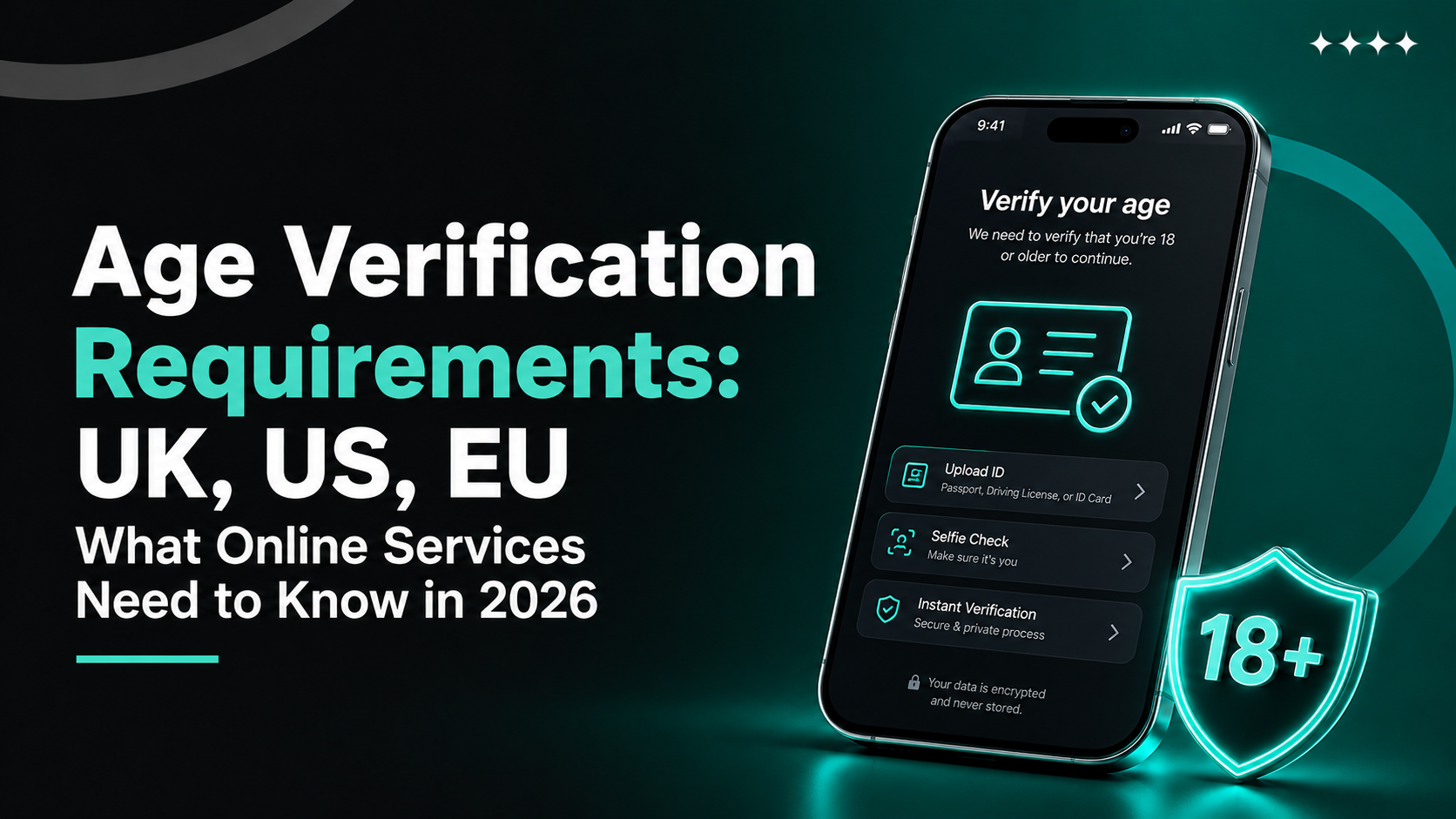
The costliest mistakes for a new webmaster aren't SEO or design. They're legal. A site with no age verification, no 2257 statement, no privacy policy, or no DMCA agent risks fines, deindexing, or frozen payouts before it ever ranks for a single keyword. The rule is simple: compliance goes in before you publish your first piece of content.
Mistake 01 — Age verification is a checkbox, not a real check
An "I'm 18" modal used to be enough. In 2026 it no longer counts as protection. More than 25 US states, plus the UK, France, Germany, Italy, Australia, and the EU, require verifiable age checks for adult platforms. UK regulator Ofcom has already issued a first £1M penalty; major operators pulled registrations in individual countries after traffic collapsed; in Germany regulators can order banks and payment providers to stop serving non-compliant platforms; and DSA fines can reach 6% of global turnover.
The fix. Deploy a certified age-assurance solution (facial age estimation, ID + liveness, digital wallet, or a zero-knowledge age proof) instead of self-declaration. Gate by the user's jurisdiction. Collect the minimum data and delete it fast — stored passport scans are themselves a legal liability.
Mistake 02 — No 2257 statement or performer age records
18 U.S.C. § 2257 requires producers and secondary producers of sexually explicit content to keep records proving every performer is an adult. Many newcomers — especially those embedding content from other platforms — don't realize they also qualify as secondary producers and need a 2257 statement on every page containing such content.
The fix. Add a dedicated 2257 compliance page and link it in the footer of every page with such content. For embedded third-party content, include a secondary-producer statement referencing the primary producer's records. Name a custodian of records.
Mistake 03 — No privacy policy or cookie consent
Operating without a GDPR-compliant privacy policy and a cookie-consent banner exposes you to European fines (up to €20M or 4% of global turnover) — and under the DSA, potentially higher. On top of that, most ad networks and affiliate programs simply won't approve an account without a privacy policy.
The fix. Generate a policy with a service (Termly, iubenda) covering cookies, analytics, ad networks, and data retention. Deploy a Consent Management Platform (CMP) for EU traffic.
Mistake 04 — No registered DMCA agent and no takedown process
Without a registered DMCA agent you lose safe-harbor protection and assume liability for user-submitted or embedded content. Separately, the absence of a clear intake-and-removal process is a direct risk to both reputation and payment relationships, as processors increasingly demand documented consent and takedown procedures.
The fix. Register a DMCA agent with the US Copyright Office (about $6). Publish a clear complaint procedure, assign an owner with a real removal SLA, and keep a log of requests.
The compliance-first rule. Retroactive compliance costs an order of magnitude more: fixing hundreds of already-indexed pages, or recovering after a processor froze your payouts, takes months. A 2257 statement takes thirty minutes to write. Reversing a penalty can take half a year.
Block 02. Technical & SEO
The most common technical mistake is accidentally locking Googlebot out. One wrong config makes the site invisible to search engines from day one. After that come performance and structured data.
Mistake 05 — Accidentally blocking Googlebot in robots.txt
A Disallow: / line inherited from a template or left over from development blocks the entire site from indexing. Adult sites often run aggressive anti-scraping configs and security plugins that catch legitimate crawlers along with the scrapers.
The fix. Check yourdomain.com/robots.txt right now. Make sure Googlebot, Bingbot, and AI-engine crawlers (e.g. PerplexityBot) are explicitly allowed. Run key URLs through the URL Inspection tool in Google Search Console.
Mistake 06 — Ignoring Core Web Vitals
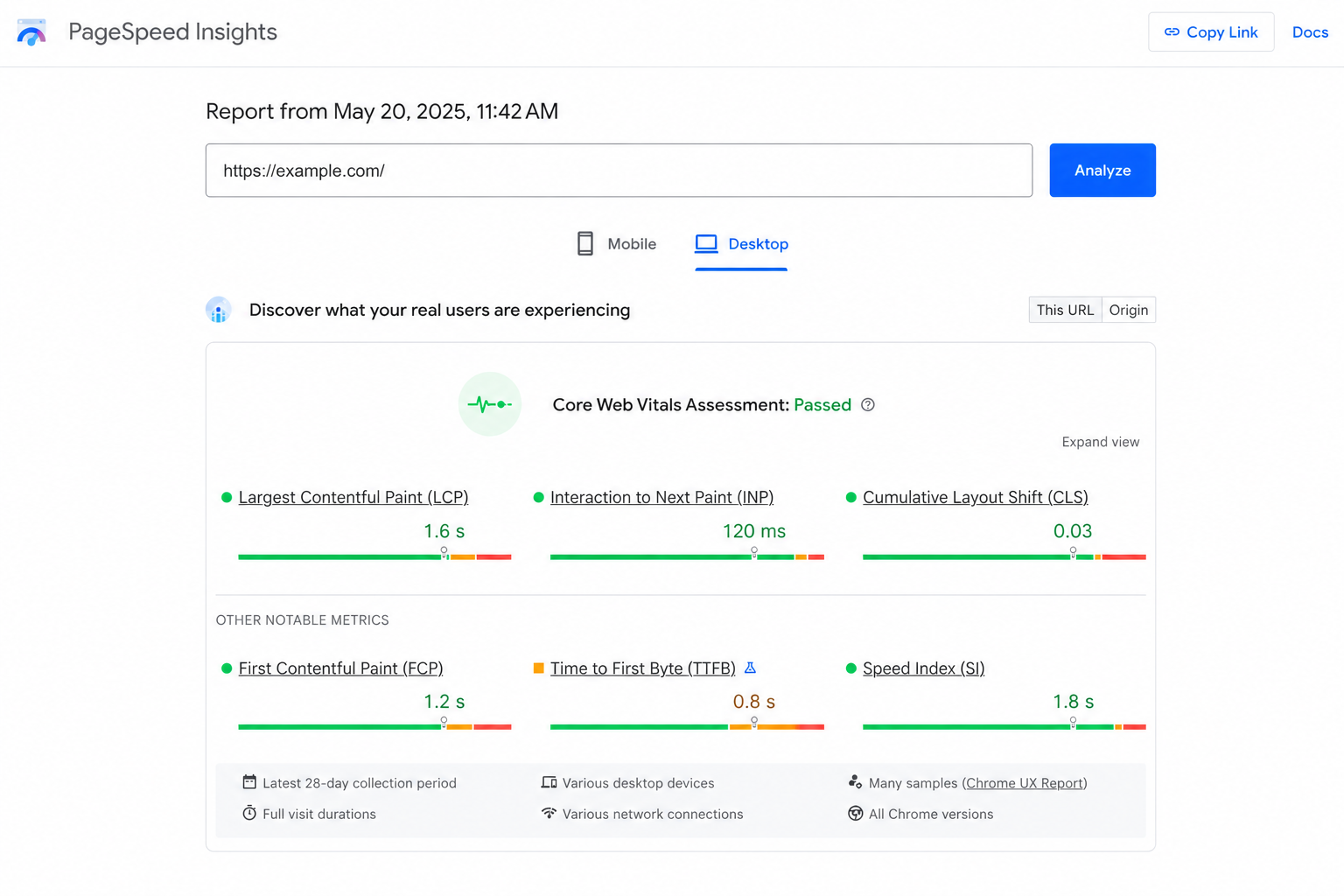
Adult sites carry heavy images, embedded video players, and stacks of ad tags — all of which wreck speed metrics. After the 2026 core updates, weak Core Web Vitals (LCP above 3s, high CLS, slow INP) actively cost rankings rather than serving as a tiebreaker.
The fix. Run your site through PageSpeed Insights and the Core Web Vitals report in Search Console. Targets: LCP < 2.5s, INP < 200ms, CLS < 0.1. On WordPress, combine caching (WP Rocket) with a CDN/optimization layer like Cloudflare, and lazy-load video and images.
Mistake 07 — No schema markup or structured data
Schema markup tells both Google and AI engines what your site is, who runs it, and what content it holds. Without Article, Organization, and FAQPage schema, you're invisible to the structured-data layer that increasingly decides who gets cited in AI-assisted search.
The fix. Add Article schema on editorial pages, Organization schema in the site header, and FAQPage schema on any Q&A content. Validate everything in the Rich Results Test. Structured data is both SEO and your ticket into AI citations.
Block 03. Authority & trust
Most newcomers publish content without saying who they are, how they evaluate, or why anyone should trust them. In today's environment, an anonymous "ghost site" is a direct ranking disadvantage — and in the adult space it hurts more, because the sector starts from a lower default trust score.
Mistake 08 — No About page or author identity
Sites that publish reviews and rankings without named authorship are treated as low-trust. The 2025–2026 updates strengthened the direct link between verified authorship as an entity and ranking performance. A generic "Editorial Team" byline with no linked author pages is nearly as weak as no attribution at all.
The fix. Build an About page: mission, evaluation methodology, editorial criteria. Add author bio pages with each writer's area of expertise and publishing history. Pen names are fine — as long as they're consistent and have a track record.
Mistake 09 — Ignoring link building → the "ghost site"
Newcomers often invest only in on-page work and ignore off-page authority signals. Without brand mentions and links from credible sources, even excellent content won't rank in a competitive niche. That's how a ghost site is born: no About, no authors, not a single external mention. It publishes for 6–12 months, gets no organic traffic because it has no domain authority, and is abandoned.
The fix. Start with the sources that actually work in the sector: trade press, participation in niche communities, creator networks, brand mentions. Twenty strong pieces with a clear editorial identity beat two hundred anonymous ones in almost any competitive scenario.
Block 04. AI search & traffic sources
This is the freshest block of 2026. Even a site flawlessly optimized for the classic SERP leaves money on the table if it ignores how discovery and traffic now actually work.
Mistake 10 — Optimizing only for the "ten blue links"
Roughly half of queries now show an AI answer at the top. You can hold the #1 position and still lose clicks. And AI Overviews are selective: they prefer to cite pages with verifiable facts and structured data over long text with a weak evidence base. That's GEO — optimizing for generative engines.
The fix. Structure content answer-first: a clear thesis, extractable facts, distinct entities, numbers with sources. Keep your schema in place. And track rankings and traffic as two separate metrics — a click drop at stable positions almost always means an AI block is taking the answer.
Mistake 11 — Betting on hollow AI content with no expert editing
The temptation is obvious: a generator writes fast and cheap. But the 2026 updates specifically demoted scaled operations with no real editorial depth — the "farms" lost 60–80% of their traffic. A hundred hollow reviews damage the whole domain's authority, not just the individual pages.
The fix. Use AI as a drafting tool, not a publishing tool. Content substantially edited by a named expert, with an original point of view, its own data, and verifiable authorship, ranks well. Raw keyword-stuffed generation does not.
Mistake 12 — Depending on a single traffic source
If all your traffic is Google organic, you're a hostage to every update and every expansion of AI Overviews. It's worse when you don't "own" the audience: no mailing list, no recognizable brand, no direct visits — just rented search traffic.
The fix. Diversify discovery: direct/brand traffic, an email list, niche communities, other search and AI engines, and any permitted social channels. A mailing list and a recognizable name are what survive any update.
Block 05. Monetization
The most expensive monetization mistake is optimizing for traffic volume instead of revenue per visitor — chasing pageviews with cheap content instead of building an audience that converts on affiliates, subscriptions, and premium placements.
Mistake 13 — One revenue stream and the first offer you're accepted into
Two mistakes in one. First: all income is tied to a single channel — usually display ads or one affiliate program. When that channel breaks (a network changes its adult policy, a program closes, a processor drops you), income goes to zero overnight. Second: newcomers take the first offer that accepts them. In adult affiliates, rates for the same product vary by 50–100% between programs.
The fix. Diversify from day one: display ads + at least 2 affiliate programs + direct placement sales as you grow. Never let one source exceed 60% of income. Apply to multiple networks per category, compare revshare vs. PPS, and negotiate once you have conversion data.
Mistake 14 — No backup processor and no chargeback/fraud defense
Adult is a "high-risk" client for payment systems. Visa, Mastercard, and bank policies shift fast, and the wave of restrictions back in 2021 showed how a single rule change can freeze an entire operation. A separate pain point is chargebacks and fraud: a high refund rate alone can cost you your merchant account.
The fix. Keep at least two processors for any direct billing. Make sure your affiliate programs use different underlying processors. Add fraud screening and chargeback-rate monitoring. And keep 60–90 days of operating costs in cash reserve.
Block 06. Content strategy
Mistake 15 — Chasing volume over quality
The niche is competitive, so newcomers conclude they should publish more, faster. That's wrong. The 2026 updates specifically punished quantity without editorial depth. A directory of 50 thorough, well-researched reviews from a credible author consistently outranks one with 500 templated listings.
The fix. Publish fewer pages at higher quality. Establish the niche in depth first, then expand in breadth. Refresh your top pages with new data each quarter.
The intermediary trap
The most vulnerable content type in the niche is the "best sites" list or directory page: it describes what lives elsewhere rather than being the destination itself. The 2026 updates reinforced a preference for destination content over intermediary content.
That doesn't mean directories can't rank. It means the directory must offer value you can't get by going straight to the listed sites: an original testing methodology, documented review criteria, first-hand experience, comparison context. A page with just a name, price, and category is replaceable by an AI answer. A page with a detailed assessment, experience notes, and verified coupon codes is not.
The right mindset. Build a site you would bookmark yourself. If the content isn't useful to a real person making a real decision, Google will eventually — and increasingly quickly — figure that out. The sites that survived update after update treated their audience as real people with real needs, not as traffic units for ad impressions.
Year-one checklist
Work through this before publishing your first piece of content, and return to it every quarter.
- Legal — Deploy certified age verification and gate it by jurisdiction.
- Legal — Publish a 2257 statement and link it in the footer of every relevant page.
- Legal — Publish a GDPR policy and deploy a CMP for EU traffic.
- Legal — Register a DMCA agent and set up a content-removal procedure.
- Technical — Verify robots.txt: Googlebot, Bingbot, and AI crawlers explicitly allowed.
- Technical — Run PageSpeed Insights on the homepage and top 5 pages; fix LCP above 3s before launch.
- Technical — Implement Article and Organization schema on key pages.
- Technical — Set up Search Console and confirm key pages are indexed.
- Authority — Create an About page with your methodology and review criteria.
- Authority — Create at least one author bio page with expertise and history.
- AI — Structure top pages answer-first with extractable facts.
- AI — Track rankings and traffic separately; watch your AI Overviews share.
- Money — Apply to at least 3 affiliate programs in your niche; compare rates before committing.
- Money — Set up a backup processor and fraud screening before you need them.
- Traffic — Start an email list and at least one non-organic discovery channel.
- Content — Publish your first 20 pages at maximum quality; don't scale before authority.
Quick reference: 15 mistakes in one line each
- Age verification as a checkbox — a real check is now required in most markets.
- No 2257 statement — you're a secondary producer the moment you embed third-party content.
- No privacy policy / cookie consent — GDPR/DSA fines and ad-network rejection.
- No registered DMCA agent — lost safe harbor and payout risk.
- Googlebot blocked in robots.txt — the site is invisible from day one.
- Ignoring Core Web Vitals — an active ranking penalty; target LCP < 2.5s.
- No schema markup — invisible in structured data and AI citations.
- No About page or authors — low E-E-A-T from launch.
- Ignoring link building — no external authority, no rankings; the ghost site.
- Optimizing only for the classic SERP — AI Overviews take the clicks; you need GEO.
- Hollow AI content — scaling without expertise wrecks the domain.
- A single traffic source — hostage to updates; no owned audience.
- One revenue stream / the first offer — one rule change zeroes out income.
- No backup processor or fraud defense — frozen payouts and a lost merchant account.
- Volume over quality — thin content wrecks authority; depth wins.
Share this article
Send it to your audience or copy an AI-ready prompt.