AI-Optimized Sites: GEO Strategies Without Compromise
With the emergence of generative models and expanded search result blocks (AI answers, Featured Snippets, Knowledge Panels) in 2026, SEO is undergoing a structural transformation. For webmasters, it is crucial to understand how to leverage these new mechanisms for sustainable traffic growth and site visibility, as well as to determine the real role of GEO in modern promotion strategies.
Understanding GEO
GEO is a methodology for optimizing site content and structure to increase the likelihood of a brand or site appearing in AI-generated answers and localized search results. GEO does not replace traditional SEO but adds an additional layer of presence for your site.
The main goal of GEO is to increase the probability of a site being included in AI answers and other SERP blocks, thereby boosting brand visibility and potential traffic. GEO results are probabilistic: the same query can return different brands and pages in different AI runs.
Current State of SEO and AI-SERP
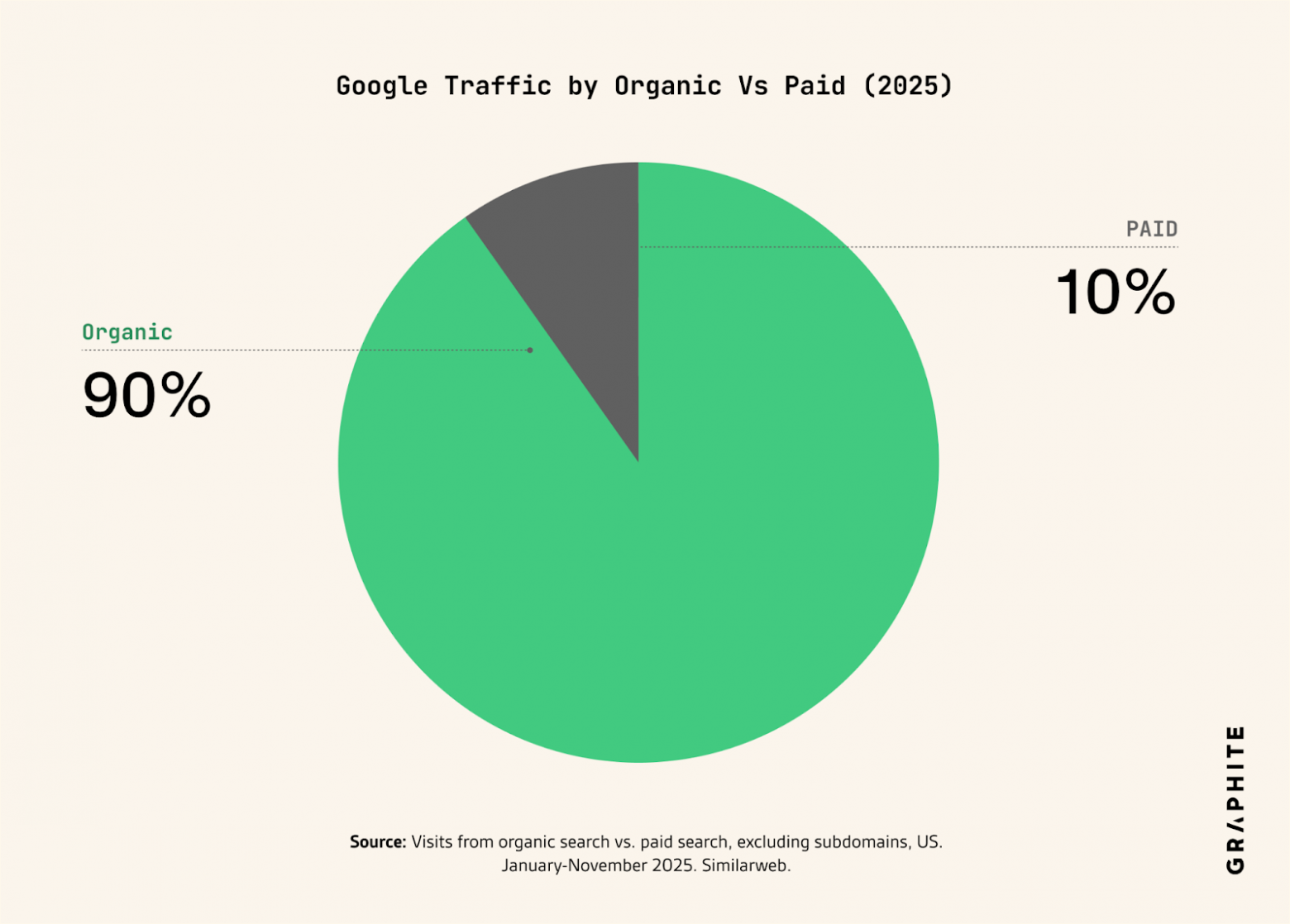
Despite changes in search algorithms and the growing role of AI, traditional organic SEO remains critical. According to a study by Graphite, conducted in partnership with Similarweb on 40,000 top US sites:
- Organic traffic still accounts for roughly 90% of all search clicks.
- CTR in organic results primarily drops in queries where AI answers appear, but these make up only about 30% of all queries.
- The top 10 largest sites continue to grow in visibility, while the most noticeable declines occur in mid- and small-sized segments, where competition and content volume limit quick adaptation.
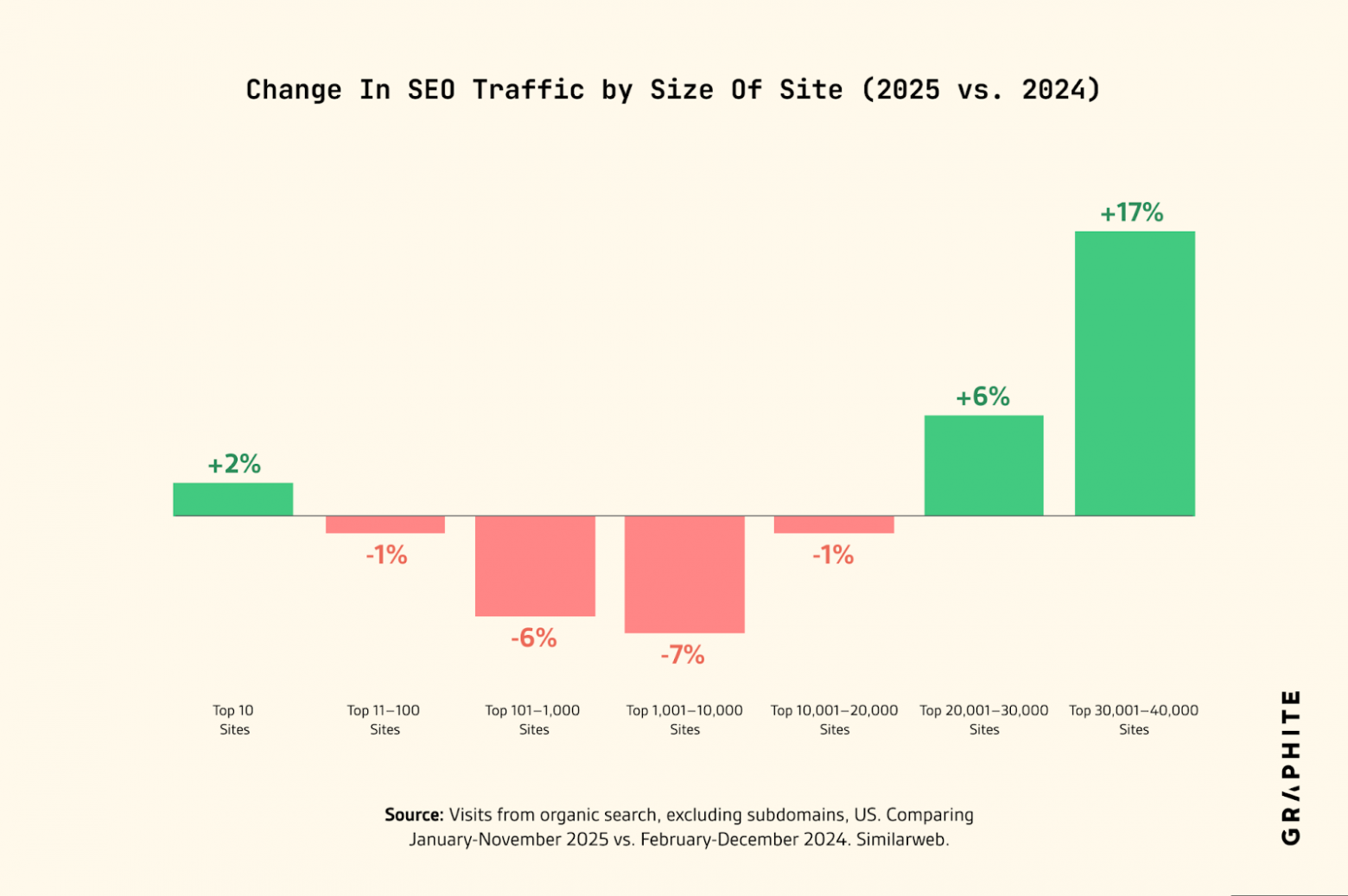
These findings show that SEO remains relevant, but the landscape has shifted: webmasters must now account for new result formats and an additional layer of competition for user attention.
Benefits of Using GEO
When applied correctly, GEO offers webmasters several key advantages:
- Expanded Brand Visibility: GEO helps secure placement in AI answers and SERP blocks, increasing the chances that users see your site even without direct clicks.
- Additional Traffic Streams: Even if organic CTR declines, presence in AI blocks creates awareness that can be converted via push subscriptions, email, or retargeting.
- Support for SEO and Local Rankings: GEO works on top of traditional SEO, strengthening site rankings and improving chances for localized promotion in specific regions.
- Reputation and Trust Enhancement: Consistent presence in AI answers and Featured Snippets establishes expertise and user trust.
- Content Strategy Flexibility: GEO allows for various formats—rankings, curated lists, comparison tables, FAQs, mini-algorithms—making content more structured and AI-friendly.
- Statistical Advantage: Even small, consistent shifts in the probability of appearing in AI answers provide a competitive edge when building repeatable AI runs and keeping content up to date.
Limitations and Risks of GEO
GEO comes with certain constraints that must be considered:
- Probabilistic Nature of Results: AI answers do not guarantee stable site presence. The same queries can return different brand lists in repeated runs. Data shows that even the most frequently mentioned brands appear in the same order in fewer than 0.1% of cases.
- Risk of Duplicate or Low-Quality Content: Mass production of localized pages, lists, or rankings without logical structure can overload crawl budgets and reduce indexing of key pages.
- Implementation and Maintenance Costs: GEO requires infrastructure for generating and maintaining variable content, systematic measurement of effectiveness, and continuous updates.
- AI Algorithm Instability: Generative models are adaptive and change in real time. Short-term “hacks” or mass techniques may produce only temporary effects.
Principles for Effective GEO Application
To achieve sustainable results, GEO must be used as a systemic tool, not a one-off optimization. Key principles include:
- Target Intent Selection: Prefer informational and educational intents over brand-specific queries. Use low-frequency or highly competitive brand queries selectively.
- Systematic Tracking of Mentions: Re-running the same query multiple times helps determine the probability of site appearance. Recommended: 15–30 key queries with repeated checks to build a statistical picture.
- Content Structuring:
- Define key terms and concepts.
- Use selection criteria lists and comparison tables.
- Include restriction blocks and warnings (“when not applicable”).
- FAQs and mini-algorithms for AI extractability.
- Evidence-Based Reviews Instead of Self-Promotion:
- Transparent ranking methodology and selection criteria.
- Review alternative solutions objectively.
- Disclose author interests for transparency and trust.
- Crawl and Site Structure Control:
- One scenario → one canonical URL.
- Parameters should not generate new pages.
- Prioritize indexing for important pages.
- Complete structured data coverage: FAQPage, HowTo, and other extractable formats.
- Repetition over Single Occurrences:
- GEO’s effect is reinforced through multiple runs and regular content updates.
- One-time AI appearance does not indicate success; frequency growth is key.
Practical Implementation for Webmasters
- Identify Competitive Layers:
- Not all queries require GEO. Focus on intents with high extraction probability and low brand saturation.
- Create a Prompt Matrix:
- Define key queries.
- Run queries while tracking mention frequency.
- Analyze results to adjust content.
- Adapt Content for AI:
- Use concise definitions and structured lists.
- Include tables and usage condition blocks.
- Add FAQs for typical questions and clarifications.
- Systematic Performance Assessment:
- Track frequency metrics across AI runs.
- Monitor changes as AI models update.
- Adjust strategy based on statistical data.
- Integrate with Traditional SEO and Reputation Marketing:
- Content and SEO remain foundational.
- GEO enhances brand presence in additional SERP layers.
- Reputation marketing builds trust and improves click metrics.
Conclusion
GEO is a tool to increase the probability of site appearance in AI answers but does not replace traditional SEO.
SEO remains the foundation of visibility and organic traffic. GEO adds an additional layer of visibility, requiring a systematic approach, discipline, and continuous monitoring.
Effectiveness is achieved through structured content, evidence-based reviews, crawl management, and repeatable processes.
Key takeaway for webmasters: GEO should be treated as an integrated part of SEO and content marketing strategy, not as a shortcut or quick-fix tactic. Only systematic, analytical, and disciplined work ensures sustainable visibility growth and long-term business value.
Share this article
Send it to your audience or copy an AI-ready prompt.